Leak Detection & Precision Pipe Repair
Locate concealed water breaches behind walls, ceilings, and under concrete foundation slabs without destructive guesswork. Our acoustic sensors and thermal cameras pinpoint leaks with pinpoint precision.
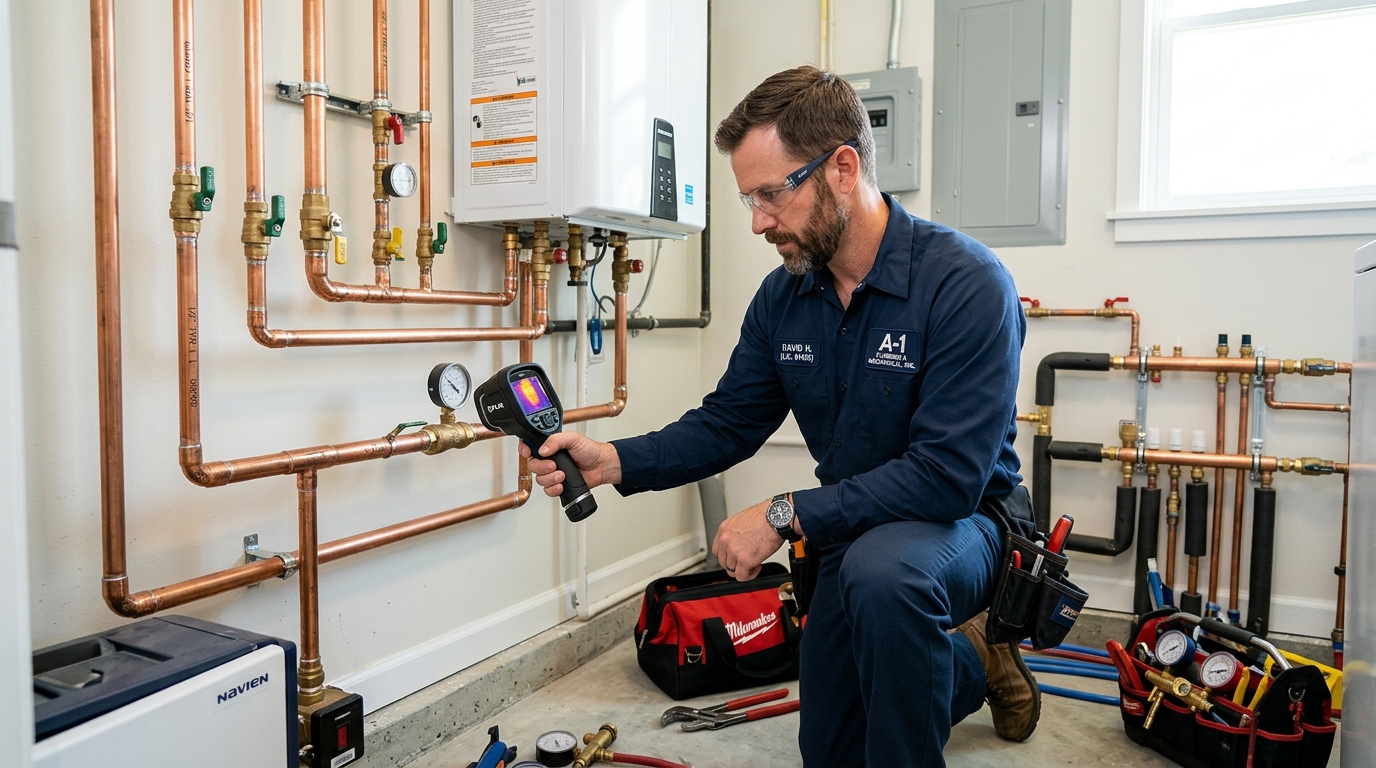
What Leak Detection & Repair Covers
We employ electronic, ultrasonic, and thermal non-destructive diagnostic methods to map plumbing leaks and execute targeted repairs.
Acoustic Pipe Tracing
Ultrasonic listening probes that amplify the distinct sound signatures of pressurized water escaping through micro-fissures in metal and plastic lines.
Thermal Infrared Scanning
Calibrated infrared imaging cameras that map subtle temperature differences caused by hidden hot or cold water spreading inside walls and flooring.
Concrete Slab Leak Isolation
Isolating leaking loops beneath structural foundation slabs and evaluating options for direct surgical concrete access or overhead PEX reroutes.
Pressure Decay Testing
Isolating domestic hot and cold supply networks with calibrated pressure gauges to definitively prove the presence and rate of water loss.
Copper & PEX Precision Patching
Excavating minimal drywall footprints and soldering copper couplings or crimping high-grade crosslinked polyethylene (PEX) bypass segments.
Pressure Regulator (PRV) Service
Testing and replacing failed pressure reducing valves that allow excessive municipal water pressure to hammer fixtures and stress pipe fittings.
Common Causes of Hidden Water Leaks
-
•
Copper Pinhole Pitting: Chemical interactions between municipal disinfectants and internal copper pipe walls erode micro-pits until water sprays in fine needles.
-
•
Foundation Friction & Slab Movement: Thermal expansion causes sub-slab copper lines to expand and contract against rough concrete or aggregate, wearing thin spots.
-
•
Excessive Household Water Pressure: Unregulated water pressure above 75–80 PSI stresses pipe elbows, soldered joints, and flexible appliance supply lines.
-
•
Renovation Punctures: Drywall screws or baseboard finishing nails penetrate water lines just enough to weep slowly over months before causing visible ceiling stains.
Warning Signs of Hidden Leaks
• The flow indicator dial on your water meter spins while all household fixtures are shut off
• Unexplained warm areas on concrete slab, laminate, or tile floors
• Mold, mildew, or damp musty smells behind cabinets or in closed closets
• Bubbling paint, peeling wallpaper, or soft drywall baseboards
• A steady, inexplicable increase in monthly municipal water utility charges
What to Expect During a Diagnostic Visit
Meter & Pressure Decay Baseline
We verify active water loss by observing the low-flow meter sweep and pressurizing domestic lines under gauge.
Non-Invasive Electronic Scanning
Our technician systematically scans floors, walls, and ground surfaces with acoustic listening probes and thermal imaging cameras.
Targeted Repair Proposal
We provide an itemized written quote outlining the exact repair approach that minimizes cutting into your finished building materials.
When Delaying Leak Detection Is Costly
Unchecked pressurized water leaks do not dry out on their own. Within 48 hours of constant moisture exposure, toxic mold spores propagate, wooden sill plates rot, and soil beneath concrete footings erodes.
Call our leak specialists immediately if:
• You hear hissing water sounds in walls that stop only when the main valve is shut
• Water utility alerts you to continuous 24-hour baseline consumption
• Wood floor planks are cupping or floor tiles are dislodging
• Cracks appear in slab foundations or drywall corners
Related Services
Leak Detection FAQs
Stop Water Loss in Its Tracks
Contact Rooter Plumbing to schedule non-destructive leak detection with upfront diagnostic pricing.